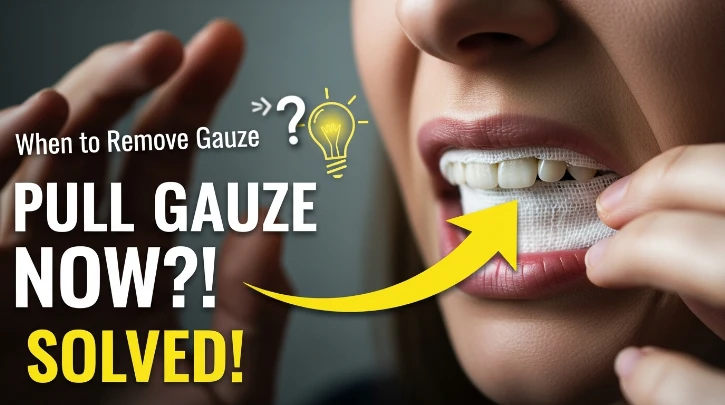
You should keep the gauze pad in your mouth for about 30 to 45 minutes after your tooth extraction. This time helps a vital blood clot form. You can then gently remove the gauze. If bleeding continues, you may need to replace the gauze. Keep reading to learn how to ensure your healing is smooth and safe.
Ignoring proper aftercare can lead to painful problems. A dislodged blood clot means serious pain and a much longer recovery. Don’t risk a dry socket and weeks of discomfort. Your understanding of gauze care is critical for quick, pain-free healing. Learn all the details here to protect your smile and health.
The First Critical Hour: Your Immediate Steps After Extraction
The time right after a tooth extraction is vital for healing. Your body starts to form a blood clot. This clot protects the empty socket and helps it heal. Your dentist places gauze over the extraction site for a good reason. It helps apply pressure and stops bleeding.
When you leave the dental office, you will likely have a gauze pad in your mouth. This gauze is your first line of defense. It helps slow the bleeding. It also helps your body begin its natural healing process. You want to keep this gauze in place as directed.
Here are some key actions to take right after your tooth extraction:
- Bite down gently but firmly on the gauze.
- Maintain consistent pressure for the first 30-45 minutes.
- Avoid talking too much during this time.
- Do not spit, rinse, or suck on anything.
Understanding the Blood Clot: Your Body’s Natural Shield
A blood clot is your body’s amazing healing mechanism. It forms in the socket where your tooth once was. This clot acts like a protective cap. It keeps food particles out and nerves safe. Protecting this clot is your main job after surgery.
The blood clot forms when tiny blood cells clump together. They create a soft plug. This plug covers the empty hole. It allows new tissue to grow underneath. Without a good clot, healing takes much longer. You want a strong, stable clot for quick recovery.
What Happens If the Clot Dislodges?
If the blood clot falls out too early, you can get a very painful condition. This condition is called a dry socket, or alveolar osteitis. It exposes the bone and nerves underneath. Dry socket causes intense pain. The pain can spread to your ear, eye, or neck. It often needs extra dental visits to treat. Avoiding dry socket is a top priority for your comfort and health.
Gauze Removal Timeline: When to Say Goodbye to the Swabs
Knowing when to remove and replace gauze is key to proper healing. The first gauze pad stays in for 30-45 minutes. After that, you need to check the bleeding. This check tells you if more gauze is needed. You must be gentle when you remove it.
Most people stop bleeding within a few hours. Some might need to change the auze a few times. You should always use fresh gauze each time. Never reuse a dirty or wet piece. Fresh gauze helps keep the area clean and reduces infection risk.
The bleeding control process involves careful monitoring. Your initial actions set the stage for how quickly you can stop using gauze. The following table provides a general guide for changing gauze after your extraction.
| Time After Extraction | Action to Take | Expected Outcome |
|---|---|---|
| First 30-45 minutes | Bite gently on the original gauze. | Bleeding should slow significantly. |
| After 45 minutes | Remove old gauze, check the site. | Bleeding lightens or stops. |
| If bleeding continues (light pink) | Replace with fresh, clean gauze. Bite gently for another 30 minutes. | Bleeding should stop or be very minimal. |
| If heavy bleeding continues | Apply firm pressure with gauze for 1 hour. Contact your dentist if it persists. | The dentist will provide further instructions. |
Signs It’s Time to Change Your Gauze
You will know when to change your gauze by checking it. The gauze will become soaked with blood. This means it has absorbed all it can. A fresh pad is then needed. You should also change it if it feels loose or uncomfortable.
Sometimes, the bleeding looks worse than it is. Saliva mixing with a small amount of blood can make it seem like a lot. Focus on how red the blood is. Bright red means active bleeding. Pink or light red means it is slowing down. You want to see the color get lighter.
When to Seek Professional Help
Most extractions heal without problems. But some signs mean you need to call your dentist. You should contact them if bleeding does not stop after several hours. Very heavy bleeding that soaks many gauze pads quickly is a concern. Also, call if you have severe pain not eased by medicine. This could be a sign of a dry socket.
Other warning signs include fever or chills. Pus around the extraction site is also a bad sign. Swelling that gets worse after 2-3 days needs attention. These symptoms could mean an infection. Your dentist can help you quickly. You should always listen to your body and seek help if something feels wrong.
Proper Gauze Care: Keeping Your Extraction Site Clean and Safe
Using gauze correctly helps your mouth heal well. You need to make sure your hands are clean. Always wash your hands before touching the gauze. This stops germs from entering your mouth. A clean mouth heals faster and better. You play a big part in preventing infection.
Always use fresh, sterile gauze pads. Do not use cotton balls or tissues. These can leave fibers behind. Those fibers can cause irritation or infection. Your dentist usually provides enough gauze. If you need more, ask your dentist for recommendations. You can also find sterile gauze at most pharmacies.
When you place the gauze, fold it into a small, thick pad. This pad should fit directly over the empty socket. Gently bite down on it. The pressure helps stop the bleeding. Do not chew on the gauze. Just steady, firm pressure is enough.
Here’s how to properly handle gauze:
- Wash your hands thoroughly with soap and water.
- Fold a new, sterile gauze pad into a square.
- Place the folded gauze directly over the extraction site.
- Bite down gently to apply steady pressure.
- Avoid moving the gauze around with your tongue.
- Discard used gauze in the trash, not down the drain.
Beyond Gauze: What Comes Next for Healing
Once you no longer need gauze, your healing journey continues. The blood clot is now firm. You still need to be careful. Protect the clot to prevent problems like dry socket. Your daily habits greatly impact how fast you recover. You want to follow all your dentist’s instructions carefully.
Good aftercare is about more than just stopping bleeding. It involves proper diet, pain control, and gentle cleaning. Each step helps your mouth get back to normal. Your dedication to these steps ensures a comfortable recovery. You can return to your normal life sooner.
Dietary Wisdom: Eating Smart After Extraction
What you eat in the days after extraction matters a lot. Stick to soft foods. Foods like yogurt, applesauce, mashed potatoes, and soup are good choices. Avoid anything hard, crunchy, or chewy. These foods can dislodge the clot. You should also avoid using straws. The sucking motion can pull the clot out.
For the first 24-48 hours, cold foods can also be soothing. Ice cream (without nuts or crunchy bits) can feel nice. Stay away from very hot foods or drinks. They can increase blood flow and restart bleeding. You need to be mindful of every bite and sip. Your choices impact your healing directly.
Pain and Swelling Management
It’s normal to feel some pain and see some swelling. Your dentist will likely suggest pain medicine. Over-the-counter options like ibuprofen can help. Follow the dose instructions carefully. You can also use an ice pack on your face. Apply it for 20 minutes on, 20 minutes off. This helps reduce swelling and discomfort.
Swelling usually peaks around 48 hours. Then it should start to go down. If swelling increases or pain worsens, call your dentist. This could be a sign of a problem. You should always trust your instincts about your body. Your comfort is important.
Oral Hygiene: Gentle Care for a Healing Mouth
Keeping your mouth clean is important. But you must be gentle. Do not rinse your mouth for the first 24 hours. After that, you can rinse gently with warm salt water. Mix half a teaspoon of salt in a glass of warm water. Swish gently and let it fall out. Do not spit forcefully.
You can brush your teeth the day after surgery. Be very careful around the extraction site. Avoid brushing directly over the clot. Use a soft-bristle toothbrush. Gentle brushing keeps other teeth clean. You prevent bacteria buildup without disturbing the healing area. Your overall oral health still needs attention.
Common Mistakes to Avoid for a Smooth Recovery
Many people make small mistakes that can delay healing. Knowing what to avoid is as important as knowing what to do. Your recovery depends on your careful choices. These simple precautions can prevent pain and complications. You want to heal quickly and safely.
The biggest mistake is disturbing the blood clot. This can happen in many ways. You might poke at it with your tongue. You might rinse too hard. Or you might eat the wrong foods. Each of these can lead to a painful dry socket. You must protect that clot above all else.
Do not do the following:
- Smoke: Smoking greatly increases the risk of dry socket and infection. Nicotine constricts blood vessels.
- Drink alcohol: Alcohol can interfere with medications and delay healing.
- Drink through a straw: The suction can dislodge the blood clot.
- Spit forcefully: This can also dislodge the clot.
- Rinse aggressively: Gentle rinsing is key; harsh swishing is harmful.
- Eat hard or crunchy foods: These can irritate the site or dislodge the clot.
- Overexert yourself: Rest is important for proper healing.
Your actions in the first few days are critical. Following these guidelines helps ensure a smooth, pain-free recovery. You are in control of your healing process. Make smart choices for your health.
Your tooth extraction recovery depends heavily on careful gauze management. From the very first minute, protecting the vital blood clot is your main goal. By understanding when and how to remove gauze, you set yourself up for faster healing. Remember, gentle care and following your dentist’s advice prevent painful problems. You are on the path to full recovery with these important steps.
Frequently Asked Questions About Gauze After Extraction
How long do I need to keep changing the gauze?
You typically change gauze until the bleeding stops or becomes very minimal, usually within the first few hours. Most people only need to change it a few times. If bleeding continues heavily after several hours, contact your dentist.
What if my bleeding starts again after I stop using gauze?
If bleeding restarts, place a new, clean piece of gauze over the site. Bite down gently but firmly for another 30 minutes. If the bleeding is heavy and persistent, call your dentist immediately.
Can I sleep with gauze in my mouth?
It’s generally not recommended to sleep with gauze in your mouth. The risk of accidentally swallowing or choking on it is present. Ensure bleeding has stopped before going to sleep without gauze.
What should the gauze look like when I remove it?
The gauze should have less blood on it each time you change it. Initially, it might be red. Later, it should be pinkish or just stained, indicating the bleeding is slowing down or has stopped.
When can I stop worrying about dry socket?
The risk of dry socket is highest in the first 3 to 5 days after extraction. After this period, the risk significantly decreases as the healing progresses and the clot becomes more stable.
Disclaimer: The information provided in this article is for general knowledge and informational purposes only, and does not constitute medical advice. It is essential to consult with a qualified dental professional or healthcare provider for any health concerns or before making any decisions related to your health or treatment. Always follow the specific instructions given by your dentist after a tooth extraction. Individual healing processes can vary.